Experience on stress management and mental health
Stress management is never about “eliminating stress”, but about finding your personal “stress flexibility zone””; The essence of mental health is not to "always remain positive and happy", but to have the ability to recover quickly from emotional fluctuations. There is no universal standard answer, whatever suits you is right.
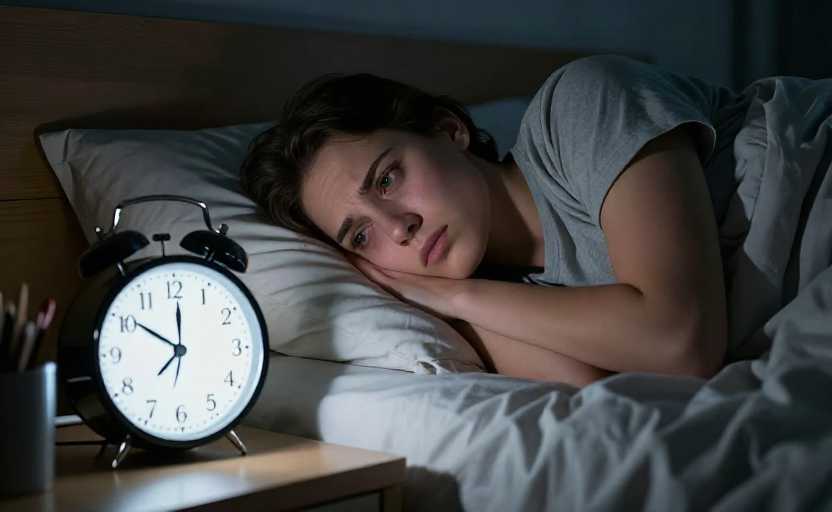
The young girl who was working in an Internet company operation position just last month came to me for consultation. The first thing she said to me was, "Teacher, can you give me a way to stop me from being anxious at all?" ”. Her performance was ranked in the middle and lower reaches of the department for three consecutive months, and a new person who had just graduated from a prestigious school joined the team. During that time, she was still checking the recruitment software at 3 a.m. every day. She piled three or four books of "Energy Management" and "Self-Control" next to her pillow. She followed the methods in the book to make a time plan and forced herself to meditate for 15 minutes every day. After persisting for a week, she even collapsed - the guilt of not being able to complete these "adjustment tasks" was worse than the work pressure itself. I didn't recommend any new methods to her. I just asked her to recall what she would do when she was stressed out in school. She thought about it for a long time and said that at that time she always hid in the playground bleachers and secretly ate strawberry-flavored Shinchi bars. I asked her to try it now, not too much, and secretly eat one at 3pm every day without feeling guilty. Two weeks later, she sent me a message and said that it seemed that the congestion was no longer that big.
Of course, I am not saying that systematic stress management methods are useless. After all, from an academic perspective, the cognitive behavioral school (CBT) advocates correcting the irrational belief that "I must be perfect", the mindfulness school emphasizes being aware of emotions without judgment, and even the currently popular "exercise regulation method" and "expressive writing" have sufficient clinical data to support their effectiveness. But the prerequisite for these methods to be useful is that you can continue to use them. I have seen too many people adopt the mentality of "it must be done according to standard procedures to be useful", and finally turn the adjustment pressure into a new source of stress, which is not worth the gain.
Two years ago, I was working on an industry-wide psychological research project, and I only slept 4 hours a day for a month. The team at that time recommended several mindfulness apps to me and asked me to take 20 minutes a day to meditate. I gave up after trying it for three days - with my eyes closed, my mind was filled with unread work messages. Sitting for 20 minutes was more tiring than a three-hour meeting. Later, I came up with a little trick that didn't make sense: I took a 10-minute detour after get off work every day to pick up strange-shaped fallen leaves on the roadside. After saving a glass jar, I bought myself an iced Americano with double the milk cap. It seems that it has nothing to do with psychology, but in those 10 minutes, I didn’t have to think about KPIs and didn’t have to reply to messages. I focused entirely on looking for leaves. On the contrary, it became the most relaxing moment for me during that period.
There are a lot of debates about stress on the Internet nowadays. One group says that "pressure is motivation, and comfort is reserved for the dead." The other group says that "pressure will destroy physical and mental health. You must completely lie down and reject pressure." In fact, both of these statements are correct and neither is correct. I met an engineer who was engaged in chip research and development. The project he was working on was 3 months behind the original schedule. Instead, he worked harder and harder, saying, "It has to be this difficult to make it interesting." But if a fresh graduate took over this job, he would probably collapse. To put it bluntly, whether pressure is motivation or harm all depends on your own tolerance threshold. Things that others find easy may be a burden to you. Pressure that others find unbearable may be just enough for you. There is no unified standard of right and wrong.
Of course, it doesn’t mean that all stress can be solved by picking up leaves and eating lollipops. I have to say something special: If you have had insomnia for more than two weeks in a row, have no interest in the things you liked before, and can’t help crying for no reason, then don’t bear it. Those professional methods that you think are “useless”, professional psychological counselors, and even taking medications as prescribed by your doctor are all necessary. Systematic intervention programs are originally designed to deal with emotional problems that have deviated from the normal range. Daily small stress really does not need to be so complicated.
In the drawer of my desk now, I still have half a can of sycamore leaves I picked up last fall, some of which look like small palms, and some of which have a corner missing from the edge. I just finished a quarter of the EAP activity plan last week and stayed up for three nights. Yesterday, I took a detour and squatted by the river for half an hour to watch the old men fishing. I didn't learn any skills in swinging the pole, so I blew the river breeze and smelled the aroma of the grilled sausages sold nearby. I felt that the air that had been stuck in my chest for several days had dissipated unknowingly.
In fact, the longer I work in this industry, the more I realize that there is no perfect standard answer to stress management and mental health. You don’t have to force yourself to learn those fancy methods, and you don’t have to think that you are mentally unhealthy because of occasional emotional breakdowns. As long as you can find your own “emotional anchor”, be able to help yourself when you collapse, and take a break before moving forward when you are tired, that’s already great.
Disclaimer:
1. This article is sourced from the Internet. All content represents the author's personal views only and does not reflect the stance of this website. The author shall be solely responsible for the content.
2. Part of the content on this website is compiled from the Internet. This website shall not be liable for any civil disputes, administrative penalties, or other losses arising from improper reprinting or citation.
3. If there is any infringing content or inappropriate material, please contact us to remove it immediately. Contact us at: