
Health tips for teenagers
Adolescent health is never a single standard of "healthy if you are not sick", but a state in which physical development, mental state, and behavioral habits dynamically match the pace of growth. There is no unified health template suitable for all children. All adjustments must be based on the child's individual situation, and do not copy other people's experiences.
Last week, when I was doing a free youth health clinic in the community, I came across a very typical example: Xiaoyu, who was in the third grade of junior high school, was dragged over by his mother. As soon as he sat down, his mother complained that his child had been complaining about neck pain and didn't want to do homework recently. She suspected that he was pretending to be sick and skipping school. As a result, I touched his cervical spine. , the curvature has straightened, and after chatting for another ten minutes, I found that he had recently dropped ten places in the mock test rankings. His parents kept talking about the key points in the exam every day, and he had to secretly watch short videos for half an hour to decompress while lying in bed at night. He often stayed up until 12 o'clock before going to bed. Not to mention the neck pain, it was strange that his mood was stable.
When many parents mention their children's health, their first reaction is to "exercise more." This is true, but in fact, practitioners in different fields have different opinions on how to exercise. Most physical education teachers in schools will recommend that children ensure one hour of moderate to high-intensity exercise every day, such as running, jumping, playing ball, and swimming. It can not only improve physical fitness, but also help grow taller. This is a general recommendation for most healthy children. But my friend who is a pediatric orthopedic surgeon has told me many times that many children now sit for one day at school and another three or four hours at home doing homework, and their waists and necks are already stiff. As soon as parents hear that they need to exercise, they force their children to run three kilometers a day, which can easily wear out their knees and strain muscles. Last year, he treated a boy in the second grade of junior high school. In order to get a perfect score in the physical education entrance examination, he suddenly increased his mileage and ran 5 kilometers a day. Eventually, his meniscus wore out and he couldn't even attend class, so he rested at home for half a month. So don’t practice blindly. If your child complains of backache and neck pain, start with 10 minutes of shoulder and neck stretching and standing against the wall, and slowly increase the amount.
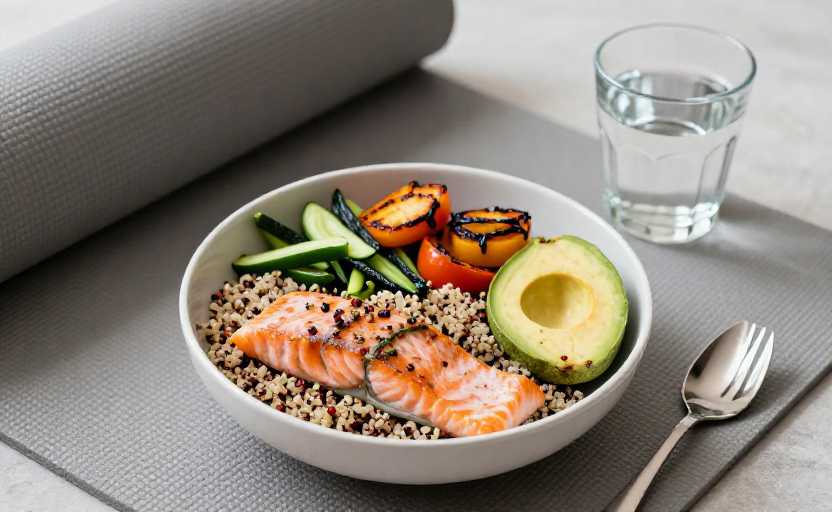
After talking about exercise, let’s talk about food. I have seen too many parents who want to give their children everything they can. They buy a lot of protein powder, DHA, and brain-tonifying oral liquid. I always feel that eating is better than not eating at all. The general advice given by the Chinese Nutrition Society is that as long as children can drink 300ml of milk, eat 1 egg, half a catty of vegetables, and an appropriate amount of whole grains and meat in their daily diet, there is no need to take additional supplements. Taking too much will increase the metabolic burden. Of course, some doctors from the clinical nutrition department have suggested that if a child is really picky about eating, or if the annual growth monitoring shows that the height and weight are below the standard line, trace elements can also be checked in a targeted manner to make up for whatever is missing. Don't just buy the "brain-enhancing" health products advertised on the market. My neighbor stepped into this trap two years ago and fed a girl in elementary school imported DHA every day. As a result, the child's hormone levels exceeded the standard and the child developed early. He had to go to the hospital for intervention. Not only did he spend a lot of money, but the child also suffered.
Many people tend to equate health with "physical health". In fact, the impact of mental state on teenagers is no less than that of physical health. Educators and psychologists also have different views on whether to reduce the burden on children. Most school teachers will advise parents to enroll their children in less extracurricular classes and leave more time for their children to play to avoid emotional problems caused by too much pressure. ; But several adolescent psychiatrists I know say that it is not enough to put no pressure on children at all. Today’s children live in groups and will naturally have peer pressure. If parents are completely indulgent, children will easily fall into self-doubt because they cannot keep up with their peers. The key is to match the pressure with support—— It’s okay for you to enroll your child in two cram schools, but you have to take time to ask him if he is tired in class and if he has anything interesting to do. If you leave half a day every week for him to play with what he likes, then the pressure is not a burden. If you only attend cram schools and you don’t even have time to chat with your child, it will be strange if there is no problem. Last month, a mother came to me for consultation. She said that in order to reduce her child's stress, all interest classes and extracurricular classes were suspended. As a result, her child was bored at home every day and didn't talk. When I asked, I found out that her classmates were talking about the content of the cram school during class. She couldn't get in the middle of the conversation. She always felt that she was worse than others, which made her even more anxious.
Oh, by the way, another point that is most easily overlooked is sleep. Many parents think that as long as their children sleep for 8 hours a day, it doesn't matter what time they go to bed. The current mainstream view in the academic community is that the peak secretion of growth hormone in adolescents is from 10 pm to 2 am, and the amount secreted in deep sleep is three times that of waking hours. Children who sleep after 11 o'clock for a long time may have their height development affected even if they sleep until 10 o'clock the next day. Of course, some studies in recent years have suggested that as long as the child's sleep cycle is regular for a long time, going to bed late and getting up late will not be a big problem. However, the problem is that most children have to go to bed at 7 a.m. to go to school, and it is impossible to get a complete 9-hour sleep cycle. Therefore, if you can go to bed before 10 a.m., you should try to go to bed as early as possible. Don't think that staying up late to watch short videos for half an hour has no impact on your children. In the long run, it will be the body that suffers.
In fact, I have been working on adolescent health for so many years, and my biggest feeling is that there are no universal health guidelines. If your child likes to be active, let him run and jump more. If he likes to be quiet by nature, taking a walk or playing badminton is also good. ; Some children can withstand the pressure and are happy to enroll in two more interest classes. Some children are sensitive and it is no big deal to study less. Observe your child's condition more and it is much more reliable to adjust blindly according to the standard answers on the Internet.
Disclaimer:
1. This article is sourced from the Internet. All content represents the author's personal views only and does not reflect the stance of this website. The author shall be solely responsible for the content.
2. Part of the content on this website is compiled from the Internet. This website shall not be liable for any civil disputes, administrative penalties, or other losses arising from improper reprinting or citation.
3. If there is any infringing content or inappropriate material, please contact us to remove it immediately. Contact us at:
