
Sports injury recovery training
For restorative training after sports injuries, the core answer is never “recover after the injury and then move again”, but to intervene as early as possible within the safe threshold without stinging, which is at least 20%-30% faster than the recovery speed of complete rest, and can also avoid the risk of secondary injuries caused by muscle atrophy and movement deformation. —I saw a set of statistics when chatting with the provincial team's rehabilitation specialist two years ago. It was also a first-degree injury to the lateral collateral ligament of the ankle. The average recovery time for people who strictly immobilized and rested was 87 days, while for those who started to resume training 72 hours after the injury, it only took an average of 52 days.
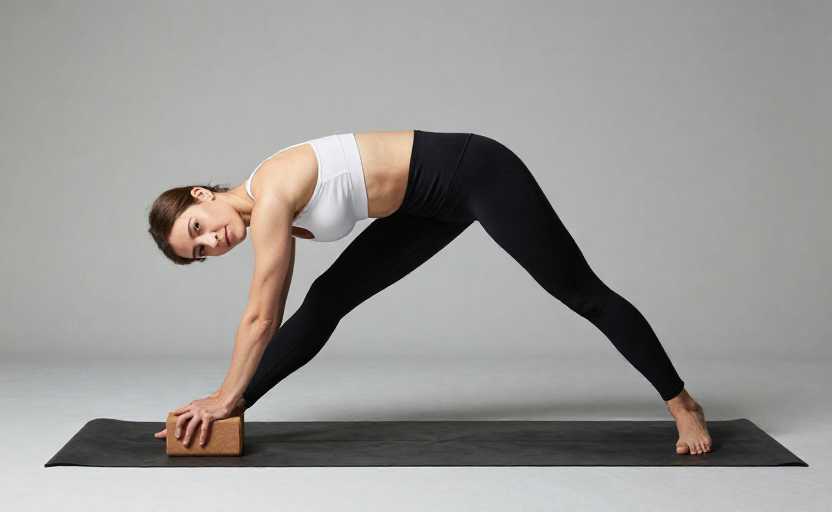
When many people are injured, their first reaction is to "stop moving and hold on". This view has been quarreling for a long time in the sports medicine community. Both schools have their own reasons: one is the early load school represented by the American College of Sports Medicine (ACSM), which believes that as long as the 48-hour acute phase has passed (swelling no longer worsens and there is no obvious pulsating pain), you can perform non-displacement isometric contractions, activate the muscles around the affected area, help lymphatic drainage and swelling, and avoid muscle stickiness.; The other school is the conservative repair school of traditional orthopedics. Especially for cases such as ligament tears and bone injuries, they will require immobilization for 1-2 weeks first, and wait for the fibrous tissue at the injured area to grow firmly before moving, so as to avoid being torn off before it has grown. To be honest, neither of the two groups is right or wrong. I have seen people who recovered quickly after being moved early, and I have also seen people who were injured twice after being moved too early. The core still depends on the extent of your injury and whether there are professional people watching.
There used to be a basketball guy who often went to our arena. He stepped on someone else's foot while jumping for a rebound, and he sprained his ankle. The X-ray did not show a fracture, but a ligament strain. He listened to the elders in the family and lay down for three weeks. When he walked, his legs were soft, and his ankles still couldn't exert strength. He hurt when he ran. Later, he went to a rehabilitation therapist. They said that his calf muscles had atrophied. He needed to practice strength first. He hooked his feet and raised his legs sideways every day. He practiced for almost a month before he dared to touch the ball. Another golfer who sprained his foot at the same time as him started to sit and hook his foot on the third day after the injury. He was able to walk slowly in two weeks, and returned to half-court to play health ball in a month and a half.
You can judge whether you can start practicing at home. The simplest criteria are: gently press the affected area with your hand, there will be no sharp pain, and there will be no pulling pain when moving the surrounding joints. You can start with the gentlest movements. For example, if you have a sprained foot, sit and stretch your legs first; if your rotator cuff is strained, do leaning against the wall and push against the wall; if your waist is protruding, do abdominal breathing to activate your core; don’t just do squats and squats. Really, I have seen too many people rush to increase the amount. They should just take care of a minor injury, but they become a chronic strain injury.
Another pitfall that is easy to step on is that many people think that recovery training is where injuries occur, but it is not at all. For example, if you have knee pain, you often need to train your glutes first. The gluteus medius is weak, and your knees buckle in when walking or running. No matter how strong you make the muscles around your knees, you will still wear the meniscus. Just like the chain on your bicycle is crooked and the gears are constantly grinding. It's useless to change a hundred gears. You have to straighten the chain. This truth is very simple to explain, but many people just don't think of it.
Nowadays, there is a lot of quarrel on the Internet about "Can you squat silently with knee injuries?" The essence is also a difference between schools: some rehabilitation practitioners believe that silent squatting is a closed-chain training, which puts less pressure on the joints and can train the quadriceps.; Some people feel that the knee angle cannot be controlled well when squatting silently, which will put extra pressure on the patellofemoral joint. In fact, the core still depends on whether your movements are correct and the location of your injury. If you suffer from patellar tendonitis and it hurts when you squat to 30 degrees, you definitely can’t practice. If you have an injury to the posterior corner of the meniscus and you squat too deep and squeeze the posterior corner, you are just looking for trouble.
I myself suffered a slight strain on my rotator cuff after falling while skiing last year. At that time, it was difficult to raise my arms, and I didn’t dare to move at first. My friend, a rehabilitation practitioner, forced me to start doing wall-pushing isometric contractions on the third day. I did 10 sets of isometric contractions for 10 seconds each time and stopped. If it hurt, I rested immediately. After a week, I could lift my arms normally. I went back to skiing in less than a month, which was a full half faster than my previous wrist sprain. All said and done, there is really no unified formula for recovery training. Don’t believe the nonsense on the Internet about “3 movements to cure lumbar protrusion” and “7 days to return to the sports field.” Your physical feeling always comes first. A little soreness and swelling are normal. If you feel a sharp pain, stop immediately. Don’t compare your progress with others, and don’t rush back to your previous exercise level. Slower, but you will go further.
Disclaimer:
1. This article is sourced from the Internet. All content represents the author's personal views only and does not reflect the stance of this website. The author shall be solely responsible for the content.
2. Part of the content on this website is compiled from the Internet. This website shall not be liable for any civil disputes, administrative penalties, or other losses arising from improper reprinting or citation.
3. If there is any infringing content or inappropriate material, please contact us to remove it immediately. Contact us at:
