
Seven actions for the elderly to extend their lives
Everyone knows that proper exercise can lead to longer life, especially elderly . However, exercise suitable for the elderly should not be too intense, have too high requirements on time and place, and must truly achieve health care effects. From the above perspective, the following small actions are in line with the health-preserving principles of traditional Chinese medicine, are simple and easy to do, and can be performed anytime and anywhere. Elderly friends who want to prolong their lives may wish to take a look.
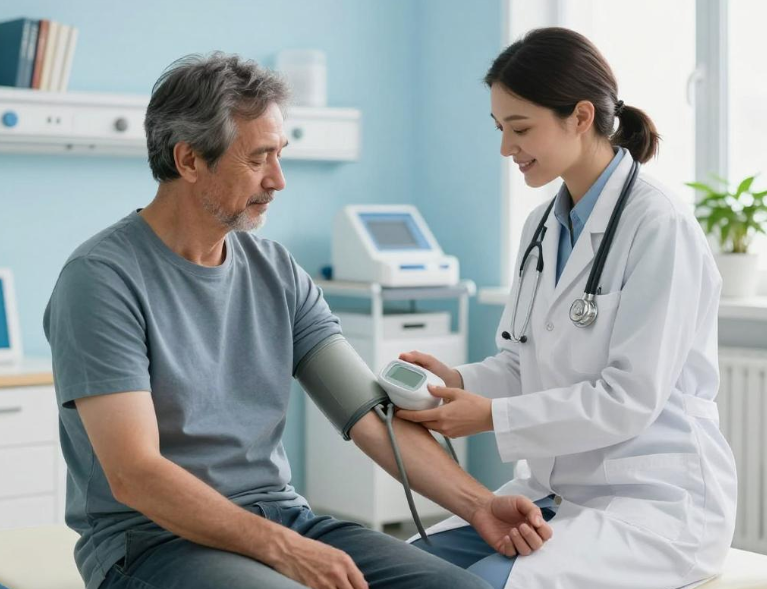
What does the old man do? Prolong life?
1. Looking into the distance
Looking into the distance helps relax the eye muscles, which is equivalent to giving Eye Do health exercises. The specific method is to sit on your balcony or climb a mountain, regularly turn your eyes and look at distant rooftops, tower spiers and other scenery. You can move your eyes when looking into the distance, keep your eyes still while moving your eyes, and rotate your eyes 10 times.
2. Swallow saliva
Traditional Chinese medicine believes that when saliva is abundant and swallowed slowly, it can moisturize the five internal organs, nourish the skin, and make people live longer. The specific method is to slightly close the lips, relax the whole body, and stir the mouth with the tongue, usually around the upper and lower teeth, first left and then right, first up and then down, and stir gently 36 times each. The force should be gentle and natural, and then press the tip of the tongue against the upper palate for 1 to 2 minutes to encourage the parotid and sublingual glands to secrete saliva. When the mouth is full of saliva, puff up the cheeks and gargle 36 times. After gargling, divide the fluid in your mouth into 3 small sips and swallow.
3. Moore
The ear is an orifice outside the kidney, leading to the brain, and is where the meridians of the whole body gather. Frequent rubbing of ears can dredge meridians, circulate Qi and blood, balance yin and yang, enhance hearing, and cure diseases and maintain health. Moor's movements include: lifting the tragus, using the index finger and thumb to lift the tragus from the inside out. Sweep the outer ear, sweep the ear from back to front with both hands, and hear a "scratching" sound.
4. Turn your neck
Long-term incorrect posture can easily lead to the proliferation and damage of related tissues and eventually cervical spondylosis. Elderly friends can do more neck-turning exercises if they have nothing to do. The action is very simple. Complete the forward flexion, backward extension, left rotation, right rotation and other movements of the neck. The speed should be as slow as possible and the amplitude should be as large as possible. At the same time, with a shoulder shrug, try to bring your shoulders closer to your ears, and then lower them.
5. Tiptoe
After sitting for a long time, it is best for elderly friends to do a "tiptoe" exercise to smooth the blood flow back to the lower limbs. This can not only avoid soreness and numbness of the lower limbs, but also eliminate the phenomenon of dark eyes and dizziness caused by sudden standing. The method is to put your feet together, lift your heels, pause for a moment, drop your heels, and lightly shake the ground. One drop at a time and one drop at a time. Pay attention to maintaining balance and repeat this 7 times.
6. Breathe
After getting up in the morning, go to a place with fresh air, open your mouth as wide as possible, breathe out and then close it, and tap your teeth gently when closing your mouth. This action can be done through the face nerve The reflex stimulates the brain and wakes it up as soon as possible. Opening and closing the mouth can make more than 40 facial muscles move rhythmically, preventing facial muscle atrophy in middle-aged and elderly people. In addition, opening and closing the mouth can move the throat, keep the Eustachian tube open, balance the pressure inside and outside the middle ear, and prevent deafness in the elderly.
7. Make a fist
"Treatise on the Causes and Symptoms of Diseases" says, "Hold your hands firmly, as if baby Hold the fist to prevent the breath from coming out", which means that clenching the fist can protect the healthy energy in the body and resist external evils. Moves such as Wu Qin Xi's "Ape Picking" and Baduan Jin's "Chen Fist and Angry Eyes" all contain clenched fist movements. The specific method is to place the thumb inward across the palm of the hand, wrap the other four fingers around the thumb and make a fist. At the same time, exert a little force on the whole body, then release it, and repeat 50 to 80 times. The place where the thumb and middle finger touch is the Laogong point. Pressing this point just right when making a fist can clear the heart fire and calm the mind.
Benefits of fitness for the elderly
1. Help sleep
Fitness can help us sleep better. The latest research shows that no matter whether the fitness time is in the morning, noon or evening, 67% of people with fitness habits have better sleep quality late at night than those without fitness habits.
2. Change your mood
Fitness can make you feel better. The endorphins secreted in the brain can make us feel happy, release anxiety and stress, and make us feel happier and more relaxed.
3. Maintain normal muscle tension throughout the body
Normal muscle tension in the human body is often in a state of slight contraction. In this state, although the muscles are working, their consumption is minimal and they require very little oxygen, so fatigue is less likely to occur. Normal muscle tone can not only promote the metabolism of tissue cells throughout the body, but also promote blood circulation. Good blood circulation can effectively supply oxygen, nutrients, hormones and other chemicals to tissue cells, and carry away various products and excretions of tissue cells, thereby keeping tissue cells in the human body constantly active.
4. Conducive to the function of the cardiovascular system
Although the heart is the main organ that maintains blood circulation throughout the body, it is not the only functional organ. In addition to the tension of the whole body muscles mentioned above, the elasticity of the aorta, the surrounding veins and their valves, and the activities of the diaphragm between the chest and abdomen also participate in the pump-like function of ejecting and recycling blood. This will prevent the blood from stagnating and coagulating in the peripheral veins, especially the veins of the lower limbs, leading to phlebitis or more serious venous blood.
5. Have a good impact on the spirit
Mild fatigue can occur if you regularly engage in moderate amounts of physical activity (moderate amounts are defined as the amount of physical activity between mild and vigorous that can cause fatigue). This relieves nervousness, anxiety or over-concentration ; This allows people to quickly calm down to rest or take a nap.
Disclaimer:
1. This article is sourced from the Internet. All content represents the author's personal views only and does not reflect the stance of this website. The author shall be solely responsible for the content.
2. Part of the content on this website is compiled from the Internet. This website shall not be liable for any civil disputes, administrative penalties, or other losses arising from improper reprinting or citation.
3. If there is any infringing content or inappropriate material, please contact us to remove it immediately. Contact us at:
